
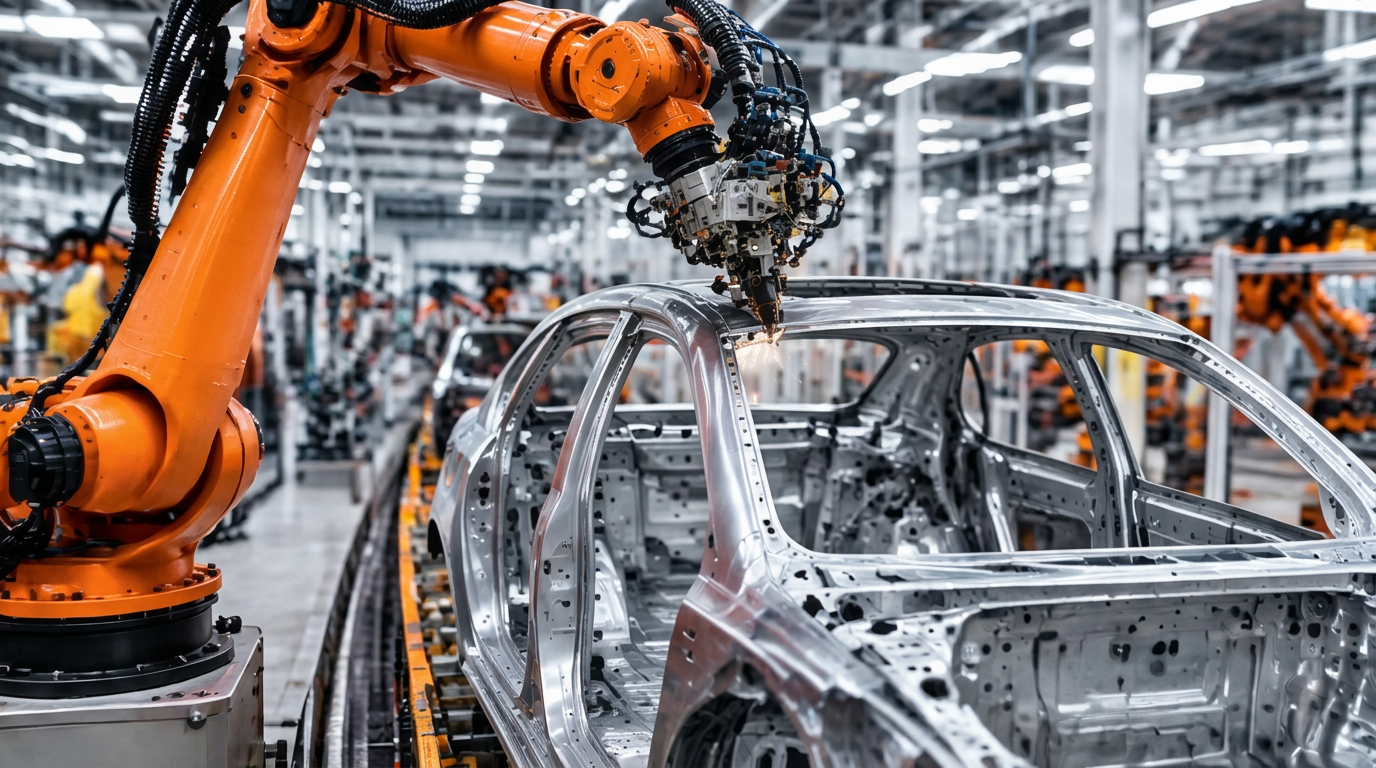
Robotics has shifted from a niche hardware category to one of the most active frontiers in venture capital, driven by advances in machine learning, sensing, and actuation that have made general-purpose and industrial robots commercially viable at a scale that wasn't possible a decade ago. Backing robotics companies requires patience for hardware development cycles and comfort with capital-intensive manufacturing scale-up, which has historically narrowed the field to a smaller set of specialist and generalist investors willing to underwrite that risk. Here are nine US firms actively investing in robotics in 2026.
Khosla Ventures
Khosla Ventures was founded in 2004 by Vinod Khosla, a co-founder of Sun Microsystems, and is headquartered in Menlo Park, California. The firm is renowned for taking a stage-agnostic approach, often backing "radical" technical bets that have a high probability of failure but offer enormous societal and financial impact if successful. Khosla Ventures is distinguished by its deep technical diligence, often preferring companies where the primary risk is the science itself rather than market adoption. In the robotics sector, the firm has historically funded companies that apply automation to traditionally manual industries like healthcare and food production. Notable portfolio companies include OpenAI, where Khosla was the first institutional investor in 2019, recognizing the potential for AI to drive robotics long before it was a mainstream trend. They also backed Berkshire Grey, a provider of AI-enabled robotic solutions for supply chain automation, and Commonwealth Fusion Systems, demonstrating a commitment to the "hardest" problems in tech. The firm’s long time horizons and willingness to fund science experiments that are years from commercialization make it a critical partner for robotics founders building breakthrough hardware.
Eclipse Ventures
Eclipse Ventures is a Palo Alto-based firm founded in 2015 by Lior Susan, focusing exclusively on modernizing physical industries through the integration of hardware, software, and data. The firm is distinguished by its "Industrial Evolution" thesis, which posits that the 85% of global GDP tied to physical industries is ripe for digital transformation. Eclipse partners with founders from "day zero," often co-founding companies through its Venture Equity program. The firm distinguishes itself by its team of partners who are former operators from companies like Tesla, Apple, and Amazon Robotics, providing deep expertise in manufacturing scale-up and supply chain management. A standout in their portfolio is Cerebras Systems, an AI chipmaker for which Eclipse led the Series A in 2016; this investment culminated in a massive $5.55 billion IPO in May 2026, representing a seventeenfold return. Another notable investment is Bright Machines, where Eclipse led the Series B to scale software-defined electronics manufacturing. By focusing on the "Eclipse Economy"—an interconnected ecosystem of physical-world startups—the firm helps founders navigate the complexities of building and shipping physical products in a software-centric world.
DCVC (Data Collective)
DCVC was founded in 2011 by Matt Ocko and Zachary Bogue, with headquarters in Palo Alto and an additional office in San Francisco. The firm invests in "deep tech" companies applying advanced computation and AI to physical industries, including robotics, from seed through growth stages. DCVC is distinguished by a team that includes more published scientists than MBAs, reflecting a commitment to technical rigor. The firm specializes in companies that solve trillion-dollar problems by reducing the costs of essential goods and services. Notable portfolio companies include Zipline, the autonomous delivery drone leader, where DCVC was an early backer helping the company scale its logistics networks in Africa and the U.S. They also co-led the $150 million Series B for Agility Robotics, the maker of the bipedal humanoid robot Digit, designed for warehouse automation. DCVC distinguishes itself by backing companies with "defensible algorithms" that unlock new capabilities in traditionally non-software sectors like agriculture and manufacturing. Their long-term commitment to climate tech and human health further aligns them with robotics founders building for sustainability and social impact.
Playground Global
Playground Global was founded in 2015 by a team of legendary technologist-operators, including Andy Rubin (co-founder of Android), Peter Barrett, Bruce Leak, and Matt Hershenson. Headquartered in Palo Alto, the firm focuses exclusively on early-stage deep tech investments, particularly in automation, next-gen compute, and engineered biology. Playground is distinguished by its 70,000-square-foot facility that provides founders with access to prototyping labs and in-house engineering expertise, allowing them to iterate on complex hardware faster than elsewhere. The firm is known for leading investments in category-defining companies like Agility Robotics, where it led the Series A round to support the development of versatile humanoid systems. Other notable portfolio companies include Relativity Space, which uses large-scale 3D printing to manufacture rockets, and MosaicML, an AI infrastructure company acquired by Databricks. Playground distinguishes itself by a willingness to partner with founders before a product or even a name exists, leveraging its partners' first-hand understanding of technical risk to transform ambitious ideas into impactful businesses. Their focus on the "foundational layers" of technology makes them a primary destination for robotics founders solving hardware bottlenecks.
Bessemer Venture Partners
Bessemer Venture Partners is one of the oldest venture capital firms in the United States, tracing its roots back to 1911 and the family office of Henry Phipps, a co-founder of Carnegie Steel. Headquartered in San Francisco, the firm operates with a decentralized model that empowers its partners to make independent, high-conviction bets across all stages from seed to growth. Bessemer is distinguished by its "Roadmap" approach, where the firm publishes deep research on the sectors it believes will define the future of technology. In the robotics space, Bessemer focuses on automation that brings software-like efficiency to physical workflows. Notable portfolio companies include leading the Series A in Velo3D, the metal 3D printing company that went public in 2021, and backing Berkshire Grey, a leader in AI-driven warehouse robotics. The firm is also known for its "Anti-Portfolio," a humorous list of legendary companies it passed on, which reflects its commitment to intellectual honesty. Bessemer distinguishes itself by providing founders with access to a massive network of over 50 senior operating advisors, helping robotics startups scale through the transition from R&D to repeatable manufacturing.
GV (Google Ventures)
GV, the venture capital arm of Alphabet Inc., was founded in 2009 by Bill Maris and is headquartered in Mountain View, California. With over $13 billion in assets under management, the firm invests across life sciences, enterprise, and robotics from seed through growth stages. GV is distinguished by its unique position: it offers the reliability of a single limited partner (Alphabet) combined with the autonomy of a traditional venture firm. This allows GV to operate on long time horizons, often decades rather than funding rounds. In the robotics sector, GV targets companies pushing the frontiers of AI and autonomous hardware. Notable portfolio companies include Nuro, the autonomous vehicle company focused on local goods delivery, where GV participated in early funding rounds as the company sought to redefine last-mile logistics. They also backed Veo Robotics, which creates computer vision systems to allow industrial robots to work safely alongside humans. GV distinguishes itself by connecting its portfolio companies with the technical talent and products of the broader Alphabet ecosystem, providing an "unfair advantage" in solving complex engineering challenges related to machine learning and sensing.
Lux Capital
Lux Capital is headquartered in New York and was founded in 2000 by Peter Hébert, Robert Paull, and Josh Wolfe. The firm invests in "emerging science and technology" at the outer limits of possibility, with a particular focus on deep tech, robotics, and autonomous systems. Lux is distinguished by its motto to "turn sci-fi into sci-fact," often backing founders who are building technologies that seem impossible to others. The firm’s team of partners, including generalists like Josh Wolfe, are known for their ability to synthesize complex scientific trends into high-conviction investment theses. In the robotics space, Lux has been a pioneering investor in companies that combine advanced hardware with sophisticated AI. Notable portfolio companies include Anduril Industries, the autonomous defense contractor where Lux was an early investor, and Saildrone, which operates a fleet of autonomous sailing vessels for ocean data collection and maritime security. Lux distinguishes itself by its intellectual fearlessness and its willingness to fund capital-intensive hardware businesses that require years of technical development. By focusing on "discontinuities" in technology, Lux helps robotics founders build moats around complex IP that can reshape entire industries.
Root Ventures
Root Ventures was founded in 2013 by Avidan Ross, who previously designed industrial robotics for the Food Network’s kitchens. Headquartered in San Francisco, Root is a seed-stage venture fund focused exclusively on technical founders building "hard tech," including robotics, hardware, and engineering tools. The firm is distinguished by its team of partners who are all engineers themselves, allowing them to perform deep technical diligence that generalist firms cannot. Root’s investment philosophy centers on underwriting technical risk—the uncertainty that a product can be built at all—rather than market risk. The firm typically leads initial funding rounds with checks of $3-5 million and reserves significant capital for follow-on support. Notable portfolio companies include Dusty Robotics, which automates construction-site layout with its FieldPrinter robot, where Root was an early backer during the company’s seed stages. They also invested in Instrumental, a company that uses AI to provide real-time insights for mass manufacturing. Root distinguishes itself by its "practicing engineer" approach, offering founders a partner who understands the intricacies of bill-of-materials, supply chains, and the path from prototype to production.
8VC
8VC is headquartered in Austin, Texas, and was founded in 2015 by serial entrepreneur Joe Lonsdale and Jake Medwell. The firm invests across deep tech, industrials, and robotics from seed through growth stages. 8VC is distinguished by its focus on fixing "broken" industries—such as logistics, manufacturing, and government—by replacing legacy technical systems with modern automation and data infrastructure. The firm’s "Build" program allows it to identify whitespaces in the market and partner with elite engineers to launch new companies from scratch. In the robotics sector, 8VC targets startups that apply AI to physical world challenges, particularly in industrial automation. Notable portfolio companies include Saronic Technologies, which builds autonomous surface vessels, and Hadrian, an autonomous precision manufacturing company. The firm also counts Anduril Industries and Palantir as key parts of its broader defense and robotics context. 8VC distinguishes itself through its patriotic thesis, believing that defending and modernizing American institutions through technology is both a civic duty and a massive investment opportunity. Their extensive network of policymakers and industry leaders helps robotics founders navigate the complex sales cycles of physical industries.
How robotics fundraising differs from software
Robotics fundraises typically take longer to close than software rounds because investors need time to diligence hardware reliability, unit economics at scale, and supply chain risk — treat your due diligence data room as seriously as you would for a Series A in any other capital-intensive sector. Expect investors to ask detailed questions about bill-of-materials costs, contract manufacturing relationships, and the path from a hand-built prototype to a repeatable, cost-effective production process. Founders who can show a credible plan for scaling manufacturing — not just a working demo — tend to have an easier time building investor conviction, since the gap between a prototype that works in a lab and a product that works reliably in the field is often where robotics companies struggle most.
Many robotics companies also use venture debt to finance equipment and inventory without diluting equity further, once they have revenue visibility to support debt service. This is particularly common for companies that have moved past the R&D phase and are scaling production of a proven product, where the capital need is more about working capital and equipment financing than funding further technology development. Structuring the right mix of equity and debt at each stage can materially change how much dilution founders and early employees absorb by the time the company reaches scale.
Founders should also think carefully about how early hardware-focused investors structure liquidation preference given the longer time horizons often required to reach scale manufacturing. Because robotics companies frequently take longer to reach an exit than software companies, compounding liquidation preferences across multiple rounds can meaningfully affect what founders and employees ultimately walk away with — it's worth modeling this out across a realistic timeline rather than assuming the outcome will resemble a faster-moving software exit.
Choosing the right investor syndicate
Beyond capital, robotics founders should weigh how much operational value a given investor can add. Firms with a track record in hardware — whether through former operators on the investment team, in-house prototyping resources, or deep relationships with contract manufacturers and component suppliers — can meaningfully shorten the path from prototype to shipping product. It's reasonable to ask prospective investors directly about their experience helping portfolio companies navigate supply chain disruptions, manufacturing scale-up, and regulatory approval processes relevant to the specific robotics application, whether that's industrial automation, defense, agriculture, or consumer hardware.
It's also worth building a syndicate that spans stages thoughtfully: a seed-stage specialist with deep technical conviction may be the right first check, but a company planning a capital-intensive scale-up should also evaluate which growth-stage investors have the balance-sheet patience and sector expertise to support it through multiple future rounds, rather than optimizing purely for the best valuation at each individual round.
Closing thoughts
Robotics investing rewards patient capital and deep technical conviction, and the firms above have each built track records backing hardware-native founders through multiple product cycles. Quantum Growth Advisors helps robotics and deep-tech founders prepare for Series A and Series B raises with investors who understand hardware timelines. If you're building a robotics company and planning a raise, book a free consult with our team.